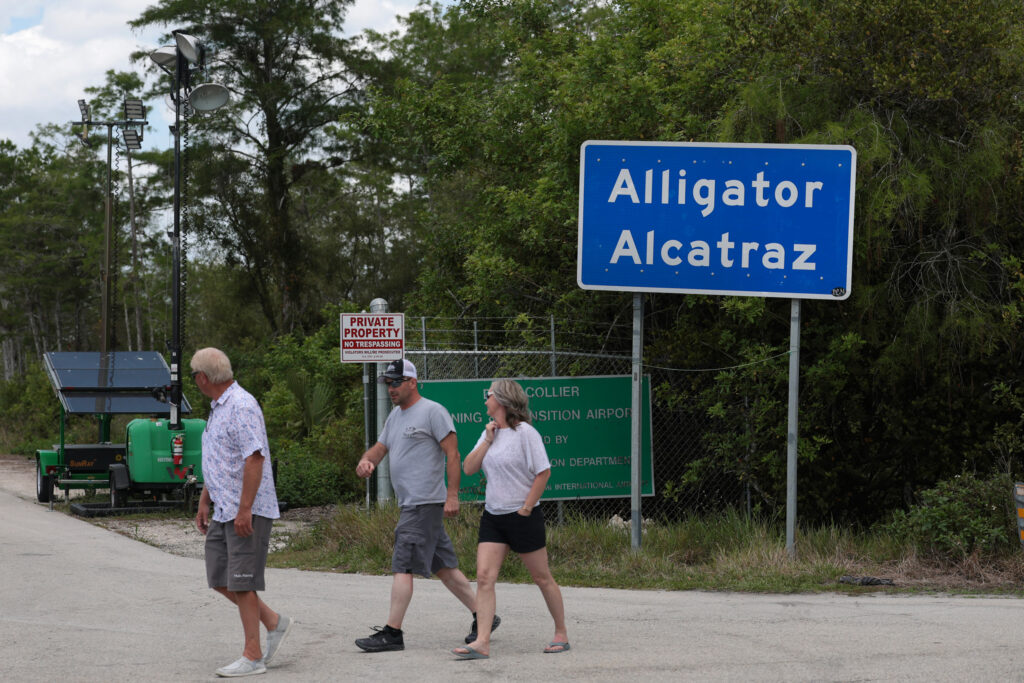
A migrant detention facility called Alligator Alcatraz now operates on lands sacred to Florida's Miccosukee Tribe within the Everglades. The facility disrupts the tribe's spring corn dance season, a longstanding cultural practice tied directly to the ecosystem. Intense light from the detention site radiates for miles, interfering with tribal ceremonies and the natural rhythms of the fragile wetland environment.
The placement represents a collision between federal immigration enforcement and Indigenous land rights. The Miccosukee maintain these territories as sacred space within one of North America's most biodiverse regions. The Everglades ecosystem depends on seasonal patterns and darkness cycles that large-scale industrial facilities disrupt.
The tribe faces overlapping pressures. Federal authorities operate the detention center on or near tribal lands. The ecological stress compounds existing threats to the Everglades from development, water management policies, and climate change. Light pollution alone affects wildlife migration, breeding cycles, and nocturnal species behavior across the wetlands.
This situation exposes tensions between enforcement priorities and environmental protection in sensitive ecosystems. The Miccosukee must navigate federal authority while defending both their cultural practices and the ecological integrity of lands they steward. The detention facility's presence forces a choice between accepting industrial intrusion or fighting federal operations on their own territory.